Creative Team Building in Berlin That Doesn't Feel Forced
Escape rooms again? A practical guide to craft-based team events in Berlin — what works for which team size, what it costs, and why making beats competing.

The Craft Hub Team

Somewhere in Berlin right now, an office manager is booking the team's third escape room this year, and everyone will pretend to be excited about it in Slack.
There's a better pattern, and it's not a secret: teams consistently rate making something together above competing against each other. We host private craft events for Berlin teams, so we're biased — but we're also the ones reading the feedback forms. Here's an honest guide to creative team building in the city, including when a craft workshop is the right call and when it isn't.
Why making beats competing
Most classic team building — escape rooms, scavenger hunts, laser tag — is structured competition. That's fine for teams that already get along, but it amplifies exactly the dynamics you might be trying to soften: the loud people dominate, the competitive people take over, the quiet people endure it.
There's real evidence behind the alternative. Yale researchers found that simply sharing an experience amplifies it — people in the study rated the same chocolate as more flavorful when tasting it at the same time as someone else, even without speaking. Doing something side by side literally intensifies the experience; that's the mechanism a shared craft table runs on and a scoreboard doesn't.
And the stakes are higher than a nice afternoon. Gallup's workplace research finds that employees with a best friend at work are significantly more likely to engage customers, get more done in less time, and share ideas — yet only two in ten employees have one. A good team event isn't entertainment; it's manufacturing the conditions where work friendships start. (The same logic applies outside the office — see our guide on making friends in Berlin.)
Craft workshops tick both boxes. Everyone is a beginner, so hierarchy dissolves — watching your engineering lead struggle with a linocut is worth three trust falls. And at the end everyone owns a physical object that outlives the event. Nobody keeps a memento from laser tag.
Creative team event formats, compared
| Format | Best for | Group size | Take-home |
|---|---|---|---|
| Pottery / clay hand-building | Almost any team; the crowd-pleaser | 6–30 | Fired pieces, delivered later |
| Wheel throwing | Small teams, memorable factor | 4–10 (wheels!) | Fired pieces, delivered later |
| Linocut / stamp printing | Insecure beginners, shared motifs | 6–30 | Prints, same evening |
| Textile crafts (crochet, embroidery) | Teams that want to talk | 6–20 | Started projects, same evening |
| Candle / jewelry making | Quick wins, mixed groups | 6–30 | Finished pieces, same evening |
| Graffiti workshop | Young teams, "very Berlin" energy | 8–20 | Photos, canvas panels |
| Cooking class | Food-first teams | 8–20 | Dinner, eaten immediately |
Aggregators like konfetti or Teamland list dozens of providers with instant booking. Booking directly with a studio usually gets you more flexibility on customization — and that matters more for team events than solo bookings, because the details (space, timing, dietary-safe snacks, accessibility) make or break the evening.
What it costs
Berlin team events cluster around €39–€90 per person for craft formats, materials included — roughly the same band as escape rooms once you add the obligatory dinner afterwards. Below ~10 people, many studios charge a flat minimum instead. Budget extra for drinks and snacks; a craft table with Sekt and pretzels beats a conference room with both.
Matching the format to your team
A quick decision aid from events we've hosted:
- New or recently merged team → hands-busy formats with shared tables (hand-building, printing). Conversation happens sideways, which is easier for people who don't know each other.
- Team with tension → avoid competition entirely. Individual pieces, shared table, generous time. Skip anything with a scoreboard.
- Remote team meeting IRL for one week → make the object the memento: everyone ships home a thing they made in Berlin together.
- Big group (25+) → rotating stations or parallel workshops; single-craft sessions get logistically messy past that size.
- Leadership offsite → longer format with reflection built in — slower crafts like ceramics suit this better than quick-win formats.
How a private event works with us
We host private team events at The Craft Hub in English (or bilingual), for groups from 6 to 30 people. You pick the craft — pottery, printing, textile work, seasonal specials — and we handle materials, guidance, and the "what do I do now" moments. Prosecco optional but recommended. Tell us your team size and date on our team-building page, and we'll suggest a format that fits.
If you'd rather trial the vibe first, join a public workshop or Craft & Connect evening with a colleague or two — several teams have booked private events after exactly that.
FAQ
Planning something for your team? Tell us the size and date and we'll propose a craft that fits — or scout us first at a public event.
Continue Reading
A few more posts from the Craft Hub blog.
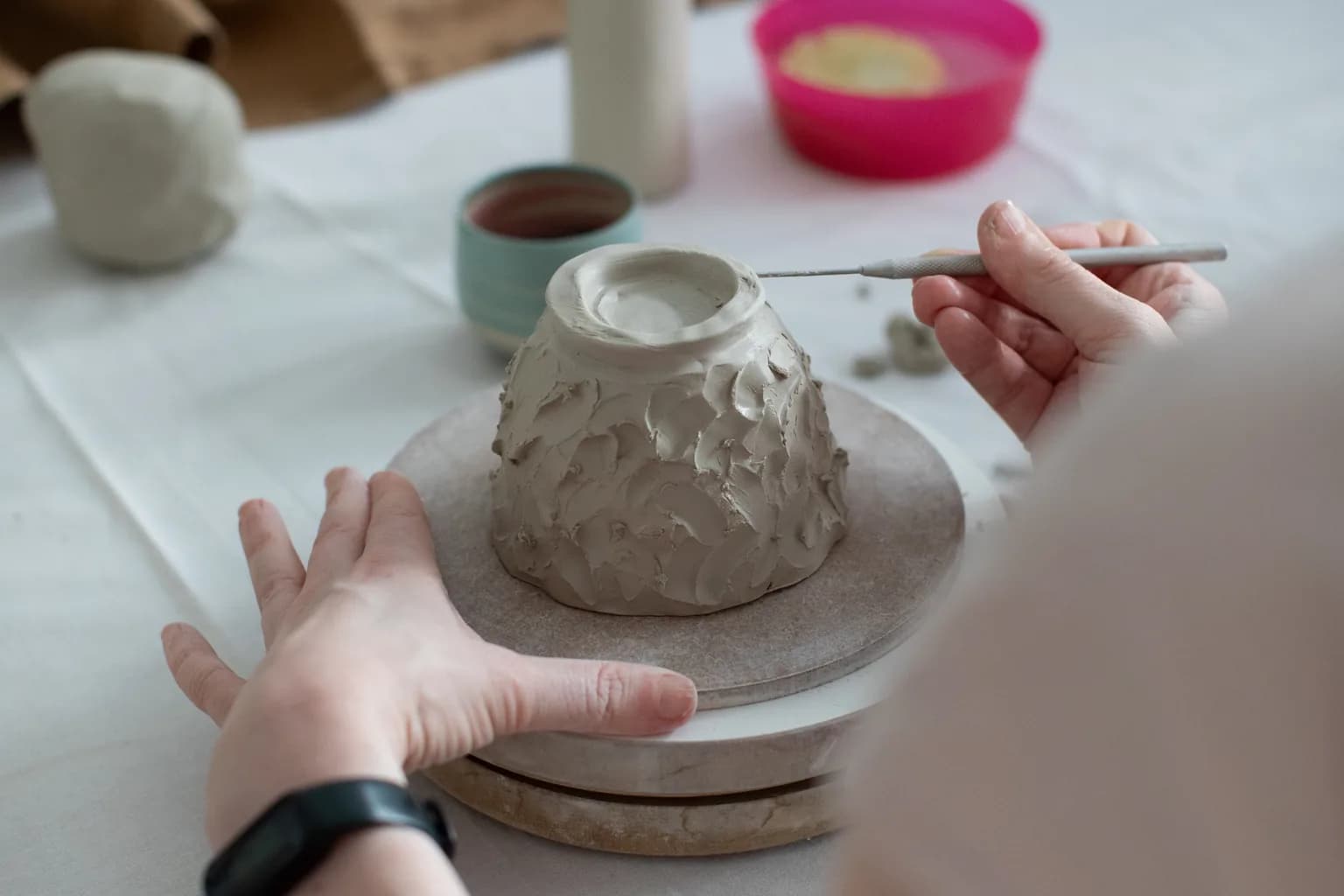
Pottery Classes in Berlin: The English-Friendly Guide
Where to learn wheel throwing and hand-building in Berlin — studios compared by neighborhood, format, and vibe, plus what a first class actually feels like.
The Craft Hub Team
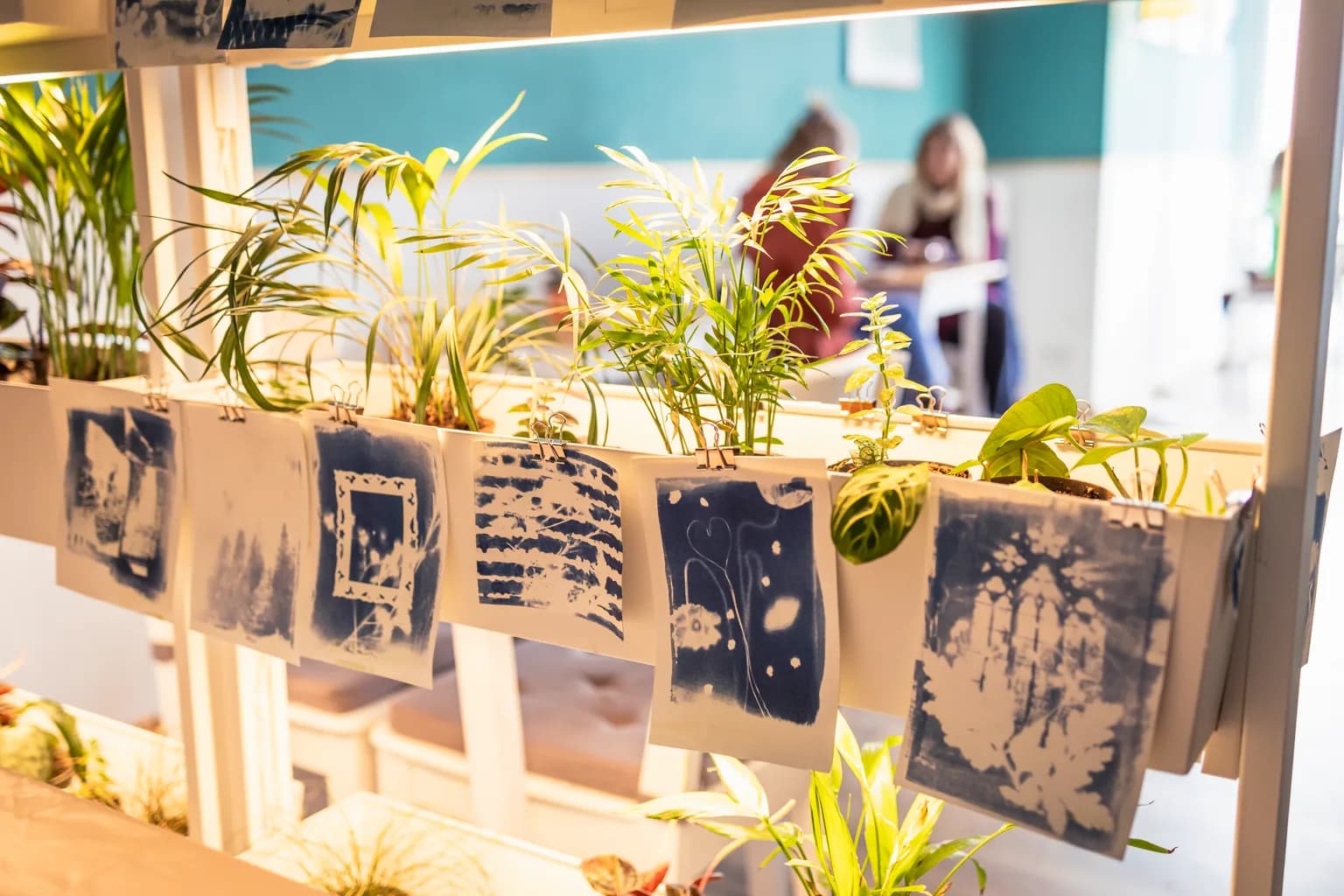
Cyanotype Explained: How Sunlight Creates Prussian-Blue Prints
A friendly introduction to cyanotype: where it came from, why the paper turns blue, how a print is made, and what affects the final result.

Iva - The Craft Hub
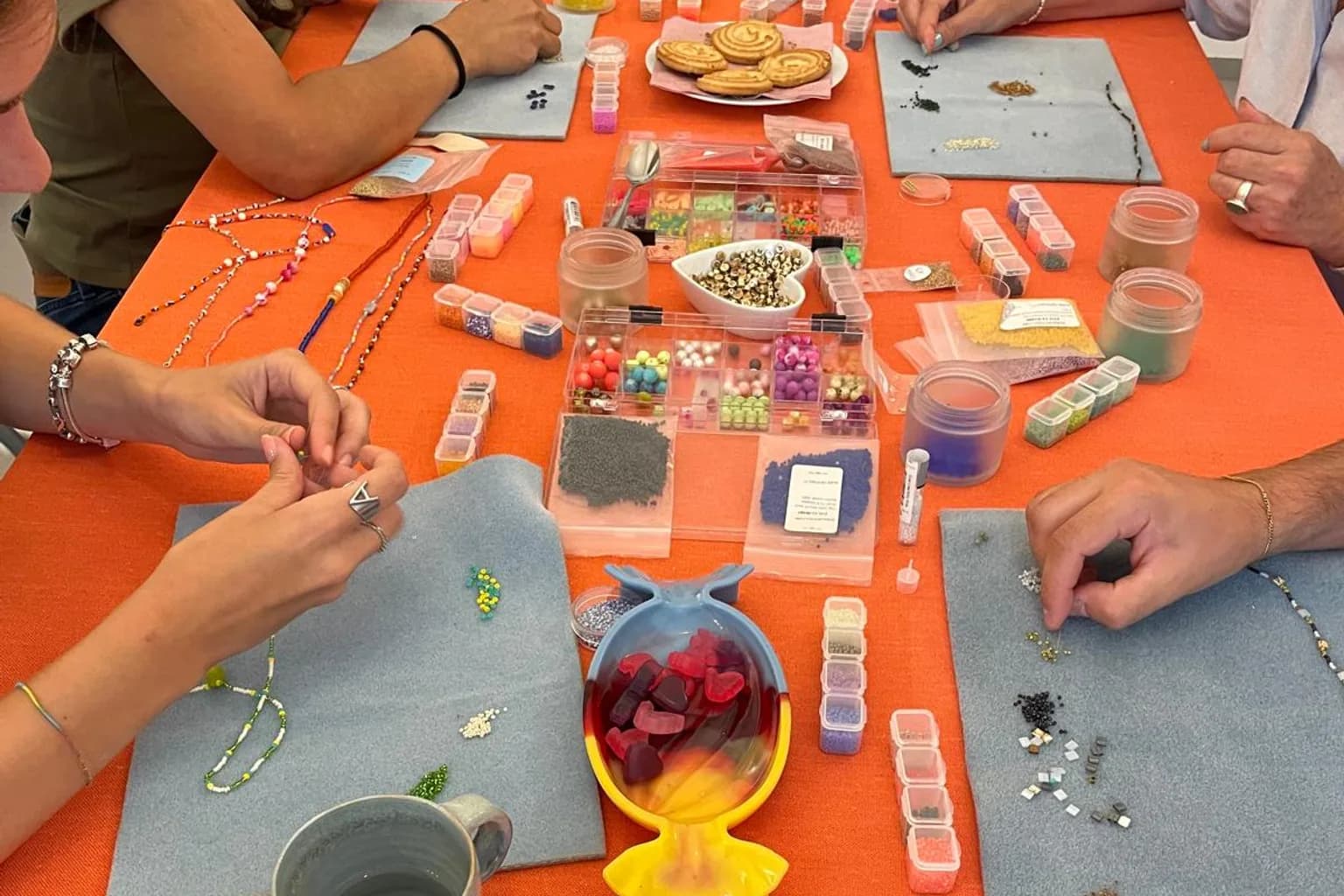
Beaded Jewelry for Beginners: Choosing the Right Thread, Wire and Findings
A concise guide to beading wire, elastic, cord, thread, crimps, clasps, and the small choices that make a necklace or bracelet comfortable and durable.
Iva - The Craft Hub